How to Grow Dwarf Hardy Kiwi Vines on a Small Balcony Trellis
Dwarf Hardy Kiwi on a Balcony: Container, Trellis, and Care Guide
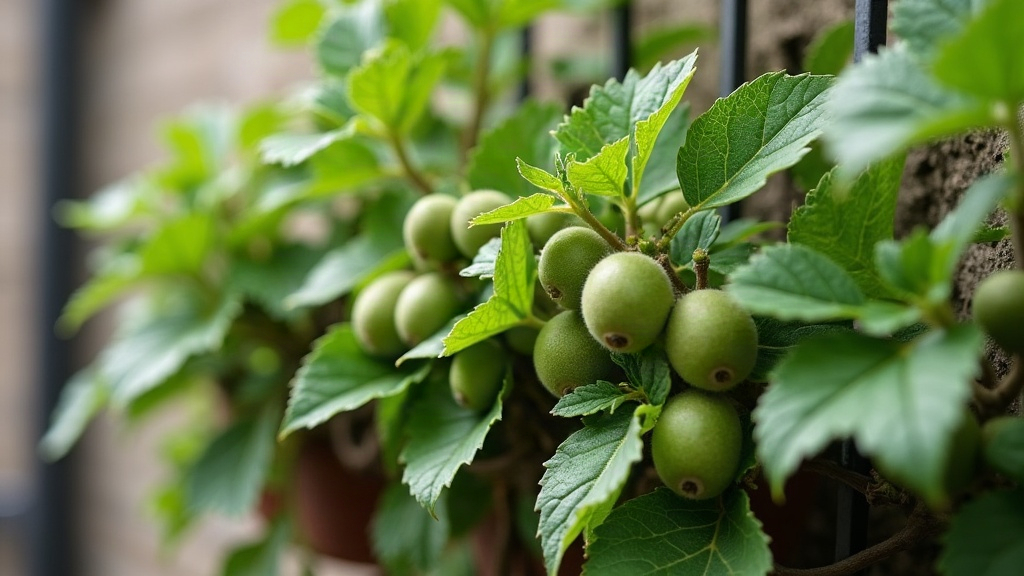
Dwarf hardy kiwi (Actinidia arguta ‘Issai’ or similar compact cultivars) is one of the rare fruiting vines that actually does well on a small balcony trellis. Forget the fuzzy supermarket kiwi for a second. Hardy kiwi gives you smooth-skinned berries, roughly grape-sized, that you pop straight into your mouth, skin and all. The dwarf types stay compact in pots without giving up much in the way of fruit. Give it a decent pot, a proper trellis, and some attention through the seasons, and you can pull a real harvest out of a space as small as 3x3 feet.
Why Dwarf Hardy Kiwi Works on Balconies
A standard hardy kiwi vine can sprawl 15 to 20 feet given the chance. Dwarf selections like ‘Issai’ were bred differently: self-fertile or close to it, compact by nature, and quicker to fruit, often within 2 to 3 years instead of the usual 5 to 7 you’d wait with a full-size vine. They also shrug off cold down to -25°F (-32°C) once established, which is wild when you compare it to tropical kiwi. That hardiness is exactly why balconies in temperate, even cold, climates can keep these vines alive and producing year after year.
Choosing the Right Container and Trellis
- Pot size: Start with a 15-gallon (57L) container, minimum. These vines are vigorous rooters, and anything smaller gets outgrown within a year or two.
- Material: Pick a frost-resistant pot (fiberglass, thick plastic, glazed ceramic). The vine lives outdoors all winter, so terracotta that cracks in freeze-thaw cycles is a bad bet.
- Drainage: Kiwi roots rot fast in soggy soil. Multiple drainage holes, plus a layer of coarse gravel at the bottom, are non-negotiable.
- Trellis style: A fan trellis, an obelisk, or a wall-mounted lattice all work. Attach it directly to the pot, or anchor it to the balcony railing or wall, because a top-heavy vine in a gust of wind will topple over fast.
- Soil mix: Go with a well-draining, slightly acidic potting mix (pH 5.5 to 6.5), and work in compost and perlite.
Planting Steps
- Plant in early spring, right after the last frost, or in fall if your climate is mild.
- Set the root ball so the crown sits just at soil level, not buried.
- Put the trellis in right away. Young vines throw out tendrils almost immediately and need something to grab from day one.
- Water deeply after planting, then mulch with bark chips to lock in moisture.
Pollination: Do You Need Two Plants?
This is the question balcony growers ask most. Most true dwarf cultivars, ‘Issai’ included, are self-fertile, so a single plant can set fruit on its own. That’s great news if you’re tight on space. That said, yields jump noticeably when a male pollinator is nearby, even a small potted male vine, or just a neighbor’s plant within bee-flight distance. If you’ve only got room for one vine, make sure it’s labeled self-fertile, and consider hand-pollinating with a soft brush between flowers in late spring to improve your fruit set.
Training the Vine on a Small Trellis
- Pick one or two strong leader stems and tie them loosely to the trellis frame.
- Once side shoots hit 12 to 18 inches, pinch them back. This pushes the plant toward lateral fruiting spurs instead of just climbing endlessly upward.
- Weave the lateral growth horizontally across the trellis, fan or espalier style. This packs more fruiting surface into a tight footprint than you’d think possible.
- Cut off any shoots heading toward the balcony interior or crowding walkways.
Watering and Feeding
- Water consistently. Container vines dry out faster than anything planted in the ground, especially once summer heat kicks in. Check soil moisture every 1 to 2 days during that stretch.
- Feed with a balanced, slow-release fertilizer in early spring. Switch to a potassium-rich feed by midsummer to help the fruit size up.
- Skip high-nitrogen fertilizers late in the season. They just push leaf growth at the expense of fruit.
Pruning for Fruit Production
Prune in late winter, while the vine is dormant:
- Cut back last year’s fruiting laterals to just 2 or 3 buds.
- Clear out dead, crossing, or spindly tendrils.
- Keep the structure open enough that light actually reaches the developing fruit.
A light trim in summer, just to rein in overly vigorous shoots, also keeps things balcony-sized rather than letting the vine take over.
Winter Care in Containers
Here’s the catch: hardy kiwi tolerates serious cold in the ground, but roots in a pot are far more exposed. There’s no surrounding soil mass to buffer the freeze. Wrap the pot in burlap or bubble wrap, or tuck it against a sheltered wall, during the coldest stretches of winter.
Common Problems
- No fruit after flowering: Almost always a pollination problem. Add a male pollinator nearby, or hand-pollinate yourself.
- Yellowing leaves: Usually overwatering or poor drainage. Check those drainage holes before you assume it’s a nutrient issue.
- Stunted growth: The pot’s probably too small, or the soil’s used up. Repot every 2 to 3 years into fresh mix.
Conclusion
Dwarf hardy kiwi vines reward balcony growers who actually want to eat something, not just look at greenery. A sturdy trellis, a generous well-draining pot, steady watering, and a bit of seasonal pruning go a long way. Do that, and even a cramped urban balcony can turn out a surprisingly solid annual harvest of sweet, vitamin-packed kiwi berries.