Why Balcony Zinnias Get Powdery Mildew in Late Summer (& Fixes)
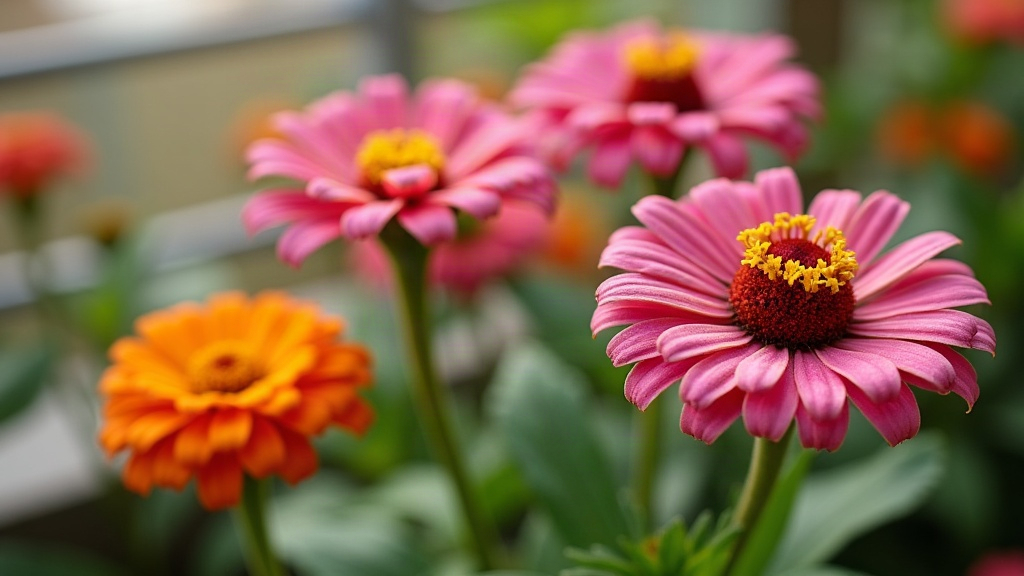
If your balcony zinnias suddenly look like someone dusted them with flour sometime in late August, you’re looking at powdery mildew. It’s a common fungal disease, and it loves exactly the kind of weather late summer throws at us: warm days followed by cool, damp nights. The good news? It almost never kills zinnias outright. Catch it early, fix the airflow, treat it properly, and your plants will keep blooming right into fall.
What Powdery Mildew Looks Like on Zinnias
It starts small: white or grayish circular spots on the upper side of the leaves, usually the older, lower ones first. Ignore it for a couple of weeks and it spreads to:
- Entire leaf surfaces, which end up with that chalky, dusted-in-flour look
- Stems and flower buds
- New growth, which can get stunted or twisted out of shape
One thing that sets it apart from pest damage: no chewed edges, no sticky honeydew residue. Just a powdery film that smudges a little if you rub it between your fingers.
Why It Shows Up Specifically in Late Summer
The fungi behind this (mostly Podosphaera and Erysiphe species, in zinnias’ case) thrive under a very specific set of conditions, and late summer on a balcony practically hands it to them on a plate.
1. Warm Days, Cool Nights
Hot afternoons followed by chillier nights are a late-summer signature. That temperature drop causes condensation to form on leaves overnight, moisture that’s perfect for spore germination, no rain required.
2. Reduced Airflow
By this point in the season, zinnias have usually grown tall and bushy. Add to that the typical balcony setup, pots squeezed together, railings or walls blocking any breeze, and you’ve got dense foliage trapping humid air right where the fungus wants it.
3. Stressed Plants
Weeks of heat, watering that’s a bit hit-or-miss, and container soil running low on nutrients all chip away at a zinnia’s natural defenses. A stressed plant is simply an easier target than one growing vigorously.
4. Overhead Watering Habits
Water the leaves in the evening (easy to do when you’re hand-watering pots on a balcony) and you leave foliage wet overnight. Again: exactly the setup spores need.
5. Spore Spread from Nearby Plants
These spores travel on the wind with surprising ease, even floating from one balcony to the next in an apartment building. If your neighbor three floors down has infected plants, yours aren’t necessarily safe either.
How to Treat Powdery Mildew on Balcony Zinnias
Step 1: Remove Infected Leaves
Cut off the worst-coated leaves and bin them (never compost them) to cut down the spore load right away.
Step 2: Improve Airflow
- Pull pots apart, give each one some breathing room
- Prune out the dense inner growth
- On a still, boxed-in balcony, a small clip-on fan genuinely helps
Step 3: Apply a Treatment
Pick one of these, all tested and reliable:
- Potassium bicarbonate spray, kills existing mildew on contact, organic-friendly
- Neem oil, apply in the evening, repeat every 7 to 10 days
- Milk spray (1 part milk to 9 parts water), a gentle, natural option that works fine on light infections
- Sulfur-based fungicide, effective, but skip it when temperatures climb above 85°F (29°C), or you risk burning the leaves
Spray thoroughly, both sides of the leaves, and do it in early morning so the plants have time to dry before evening sets in.
Step 4: Adjust Watering
Water the base of the plant, in the morning, so the foliage is bone dry well before nightfall.
Preventing It Next Season
- Go for mildew-resistant varieties like the ‘Profusion’ or ‘Zahara’ series
- Don’t crowd the pots from day one of the season
- Feed consistently with a balanced fertilizer to keep plants strong and resilient
- Start preventive neem oil sprays in midsummer, before you see a single symptom
Final Thoughts
Powdery mildew on balcony zinnias isn’t a verdict on your gardening skills, it’s a predictable late-summer glitch caused by humidity, cramped airflow, and plants running on empty. Spot it early, treat it, open things up for better air movement, and your zinnias will bounce back and keep flowering right up until that first frost hits.