How to Grow Dwarf Sunflowers in Railing Pots on a Balcony
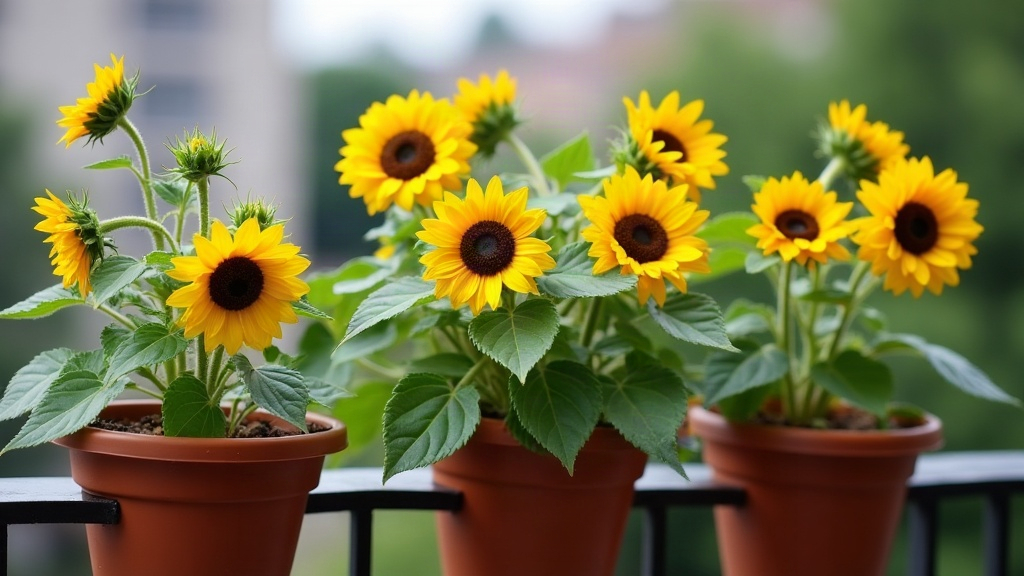
Dwarf sunflowers might be the single easiest win for anyone trying to liven up a balcony railing. Give them a deep pot, plenty of sun, steady water, and a planter that actually stays put on the rail, and you’ll get cheerful, compact blooms right through summer. Forget the six-foot giants leaning over the fence at your neighbor’s place. Dwarf varieties top out around 12 to 24 inches, which is exactly the scale a balcony railing can handle—though if you’re working with a shadier spot, consider dwarf blueberries in containers instead.
Why Dwarf Sunflowers Work So Well on Balconies
Full-size sunflowers send down long taproots and grow heavy, top-heavy stalks that tip right over once you confine them to a shallow pot. Breeders solved that problem with cultivars like ‘Sunspot,’ ‘Elf,’ ‘Suntastic Yellow,’ and ‘Little Becka’, all developed specifically for pots, borders, and cramped spaces. Here’s what makes them worth planting:
- They stay short and sturdy, shrugging off the wind gusts that hit upper-floor balconies harder than you’d expect
- They bloom fast, usually within 50 to 65 days of sowing
- Each plant tends to throw multiple flower heads instead of one solitary giant bloom
- They tolerate cramped roots far better than their full-size relatives
Choosing the Right Railing Pots
Railing planters clip onto or hang over the rail, so here weight and depth matter a lot more than how wide the pot looks.
Depth and Size
- Go for at least 10 to 12 inches of depth. Even dwarf sunflowers need real room to anchor their roots.
- Pick planters that hold roughly 5 to 8 liters of soil per plant. Skimp here and the plant will let you know.
Material
- Resin or fiberglass stays light and won’t crack when the afternoon sun bakes the railing.
- Terracotta looks classic, sure, but it dries out fast and adds serious weight, only use it if your brackets can genuinely take the load.
- Skip thin, flimsy plastic. Sunflowers basically act like little sails in a breeze, and cheap plastic will split under that kind of stress.
Secure Attachment
Check that the clips or hooks are rated for the pot’s filled weight, meaning soil, water and plant combined, not the weight of the empty container off the shelf. One strong gust hitting a loaded planter puts a surprising amount of strain on those brackets.
Planting Step-by-Step
- Fill the pots with a well-draining potting mix cut with some compost. Skip plain garden soil; it compacts hard inside containers and suffocates roots.
- Sow seeds about ½ inch deep, spacing them 6 to 8 inches apart if you’re putting more than one in a pot.
- Water gently right after sowing. Keep the soil moist, not waterlogged, until germination kicks in, usually within 7 to 10 days.
- Thin the seedlings down to one strong plant per 6 to 8 inches once they hit 2 to 3 inches tall. Yes, it feels wasteful, but crowded seedlings compete for light and lose vigor.
Sunlight and Watering Needs
Dwarf sunflowers are sun addicts, no way around it.
- Sunlight: Shoot for 6 to 8 hours of direct sun a day. A south- or west-facing balcony is ideal.
- Watering: Check the soil daily in summer. Railing pots dry out much faster than ground beds thanks to wind exposure and heat bouncing off the building. Water once the top inch feels dry, and soak it thoroughly until water runs out the drainage holes.
- Avoid overwatering: Soggy soil kills a sunflower through root rot faster than a dry spell ever will.
Feeding for Bigger, Brighter Blooms
Container soil burns through nutrients quickly, so:
- Work a slow-release balanced fertilizer (10-10-10) into the mix at planting time.
- Once buds start forming, feed every 2 to 3 weeks with a diluted liquid fertilizer.
- Go easy on nitrogen once blooming begins. Too much and you’ll get lush leaves instead of flowers, which defeats the whole point.
Common Problems and Fixes
- Leggy, weak stems: Almost always a light problem. Rotate the pot toward the sun or move it somewhere brighter.
- Wilting even with regular watering: Check the drainage holes aren’t clogged. Roots sitting in stagnant water will wilt just like a plant that’s bone dry.
- Aphids showing up: A weekly spray of mild soap water usually clears them out within a couple of weeks.
- Toppling over in wind: Add small stakes, or loosely tie the stem to the railing with twine for backup during storms.
Extending the Bloom Season
Deadhead spent flowers regularly, this pushes the plant to keep producing new buds instead of putting energy into seed heads. Try succession planting too: sow a fresh round of seeds every 2 to 3 weeks through spring, and you’ll have color rolling in right through summer and into early fall.
Conclusion
Put dwarf sunflowers in secure railing pots and even the tiniest balcony turns into a bright little pollinator magnet. Deep containers, full sun, consistent watering, a bit of feeding here and there, that’s really all it takes. Minimal effort, maximum color. You genuinely don’t need a yard to grow a real sunflower patch.