Clay Pebbles vs Rockwool for Balcony Hydroponic Herb Towers
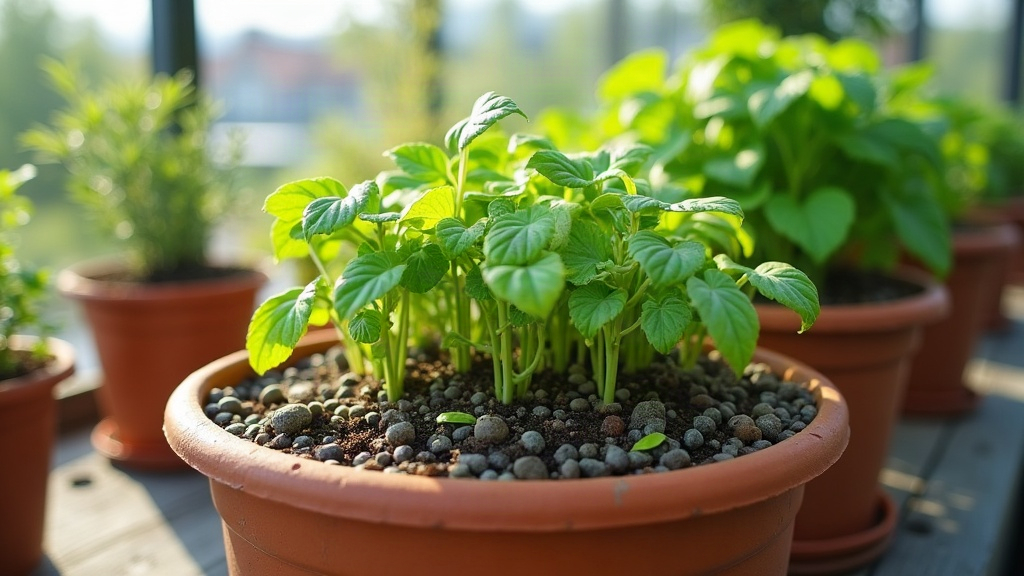
If you’re putting together a hydroponic herb tower for your balcony, the growing medium you pick matters more than most people realize. It affects root health, how often you’re topping off water, even how much mess you deal with on setup day. Clay pebbles (LECA) and rockwool are the two names you’ll run into most often, and honestly, they’re built for different jobs. This guide lays out the real differences so you can match the medium to your space and your plants.
Quick Answer
- Choose clay pebbles if you want a reusable, low-mess medium with strong aeration for mature herbs like rosemary, thyme, or mint.
- Choose rockwool if you’re starting seeds or cuttings and need steady moisture for fast, even germination, especially with basil, cilantro, and lettuce.
A lot of balcony growers end up using both: rockwool cubes to get seedlings going, then moving everything into clay pebbles once the roots take hold.
What Are Clay Pebbles (LECA)?
Clay pebbles, also known as LECA (Lightweight Expanded Clay Aggregate), are small fired clay balls with a porous structure inside. You’ll see them all over Kratky setups, Dutch buckets, and ebb-and-flow systems.
Pros:
- Reusable for years. Just rinse and sterilize between grows.
- Excellent drainage and airflow, which cuts down on root rot
- pH-neutral, won’t break down or compact with time
- Good weight-to-stability ratio, useful for tall towers catching wind on a balcony
Cons:
- Doesn’t hold water well, so towers need frequent irrigation (every 15 to 30 minutes with drip systems)
- Not great for tiny seeds, which tend to slip through the gaps
- Needs a pre-soak and rinse before first use to get rid of clay dust
What Is Rockwool?
Rockwool is made by spinning melted basalt rock into fibrous cubes or slabs. It’s practically the default choice in commercial hydroponic nurseries, thanks to its dependable balance of water and air.
Pros:
- Holds moisture consistently, which makes it great for seed starting and cuttings
- Comes pre-cut into small cubes that drop right into net pots or tower slots
- Encourages fast, even root development
- Easy to handle, no dust rinsing needed (though you should still adjust the pH before use)
Cons:
- Basically single-use, degrades after one or two grow cycles
- Slightly alkaline right out of the package, so it needs a pH-adjusted soak (5.5 to 6.5) before planting
- Not biodegradable, so it piles up as landfill waste over time
- Can hold too much moisture in humid balcony conditions, which raises mold risk
Side-by-Side Comparison
| Factor | Clay Pebbles | Rockwool |
|---|---|---|
| Reusability | High (rinse & reuse) | Low (compost or discard after use) |
| Best for | Established plants, tower bases | Seed starting, cuttings |
| Water retention | Low, needs frequent cycling | High, holds moisture longer |
| Setup cost | Higher upfront, cheaper long-term | Lower upfront, recurring cost |
| Mess/dust | Needs pre-rinse | Minimal, but fibers can irritate skin |
| Environmental impact | Reusable, lower waste | Non-biodegradable waste |
Which One Fits Your Balcony Setup?
Small balcony, limited watering schedule: Clay pebbles are the safer bet here. They don’t stay soggy, so if you miss a watering cycle during a heat wave, you’re not inviting root rot.
Starting from seed indoors before moving outside: Rockwool wins, no contest. Its steady moisture helps basil and cilantro germinate faster and more evenly than clay pebbles, which dry out too fast for delicate young roots.
Budget-conscious, long-term growers: Clay pebbles pay for themselves over a few seasons, since you’re not buying new media every single grow cycle.
Renters or short-term setups: Rockwool’s low upfront cost and simplicity make it easy to tear down and start fresh without storing a bin of bulky pebbles somewhere.
Can You Mix Both?
Yes, and this is actually the go-to method among experienced balcony hydroponic growers. Start your seeds in small rockwool cubes, then once roots start poking through the bottom (usually around 10 to 14 days), transplant the whole cube into a net pot packed with clay pebbles. That way you get rockwool’s reliable germination plus the long-term durability and reusability of clay pebbles.
Conclusion
There’s no single “best” medium here, it really comes down to your growth stage and how much maintenance you’re willing to do. Clay pebbles suit growers who want a durable, reusable base for mature herb towers. Rockwool is hard to beat when you need seeds and cuttings to get off to a strong start. For most balcony herb towers, using both at different stages gives you the healthiest roots and the least waste in the long run.